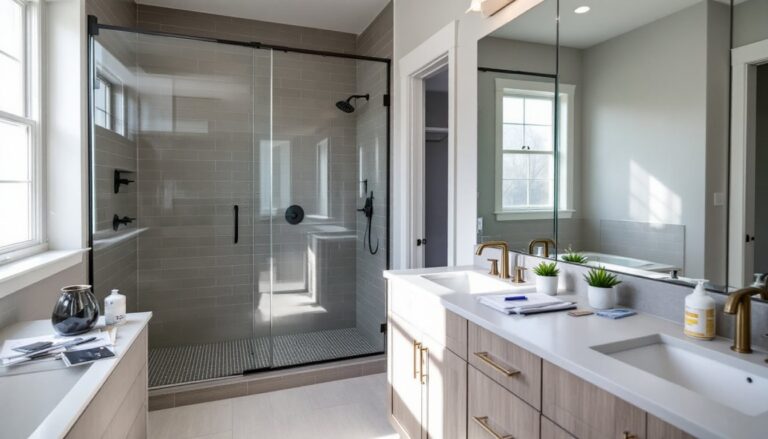
A bathroom vanity is often the first thing people notice when they step into your bathroom, and it’s one of the easiest ways to transform the entire space. If you’re considering a Perigold bathroom vanity for your home upgrade, you’re looking at a piece that blends contemporary design with practical functionality. These vanities have become increasingly popular among homeowners who want quality, style, and durability without the contractor markup. Whether you’re planning a full bathroom remodel or just refreshing the fixtures, understanding what a Perigold vanity offers will help you make a confident choice for your renovation project in 2026.
Table of Contents
ToggleKey Takeaways
- Perigold bathroom vanities combine contemporary design with practical functionality, offering quality storage, clean lines, and durable hardware at a mid-range price point without premium branding markups.
- Available in contemporary, traditional, and transitional styles with finishes ranging from $400–$1,600+, Perigold vanities provide options for every budget, with mid-range models delivering the best value for durability and features.
- Proper sizing and installation are critical—measure your wall space carefully, verify stud locations for secure mounting, and consider hiring a licensed plumber ($300–$600) to ensure code compliance and prevent costly mistakes.
- Perigold vanities typically last 10–15 years with basic maintenance, including daily wiping, monthly track cleaning, material-specific countertop care, and regular under-sink leak checks to prevent water damage.
- Choose between solid wood for better long-term durability and refinishing options, or veneered MDF for affordability and humidity resistance, depending on your renovation timeline and budget constraints.
- Save on your bathroom vanity upgrade by pairing cabinet bases with less expensive countertops, selecting reliable mid-range faucets, or installing it yourself, while shopping during spring (March–May) or Black Friday for 10–20% discounts.
What Makes Perigold Bathroom Vanities Stand Out
Perigold bathroom vanities have carved out a reputation for combining aesthetic appeal with solid craftsmanship. Unlike mass-produced vanities sold at big-box retailers, Perigold units typically emphasize thoughtful design details and material quality that hold up under daily use.
One key strength is the attention to storage functionality. Most Perigold vanities feature deep drawers with quality slides and compartmentalized storage, practical touches that make morning routines easier. The countertop integration is clean and minimal, reducing the number of awkward gaps where soap and water accumulate.
Material choices matter. Perigold vanities typically use solid wood construction or veneered medium-density fiberboard (MDF) with water-resistant finishes. This distinction is important: solid wood costs more but offers better long-term durability and the option to refinish down the road. Veneered MDF is more affordable and resistant to warping in humid environments, though it’s less repairable if the surface gets dinged.
The hardware selection, drawer pulls, hinges, faucet mounts, usually comes from mid-range suppliers known for reliability rather than decorative boutique brands. You won’t overpay for a logo, but you’ll get hardware that functions smoothly for years.
Design Styles and Finishes Available
Contemporary and Modern Options
If your bathroom leans minimalist, Perigold’s contemporary line delivers clean lines and handleless drawer fronts, a look popularized by European design. Finishes in matte white, soft gray, or natural wood tones keep the aesthetic uncluttered. These vanities typically measure 24 to 60 inches wide, with options for single or double sink configurations.
Contemporary models often feature integrated LED lighting above or within the mirror frame, eliminating the need for separate sconce installation. Wall-mounted versions save floor space in smaller bathrooms, while freestanding units with legs underneath maintain visual lightness.
Matte or soft-close cabinet doors are standard on modern lines, a small detail that prevents slamming and extends the lifespan of hardware. The countertops tend toward quartz or solid surface materials rather than marble, which is softer and requires more maintenance.
Traditional and Transitional Designs
For homeowners favoring classic or transitional aesthetics, Perigold offers vanities with raised panels, turned legs, and decorative hardware like brushed-brass or oil-rubbed bronze pulls. These typically feature warm wood finishes such as espresso or natural cherry, giving bathrooms a more established, collected-over-time feel.
Traditional models often include a matching mirror frame and optional hutch-style upper storage, genuinely useful if your bathroom lacks medicine cabinets or built-in shelving. Countertops in these ranges frequently feature marble, granite, or detailed edge profiles that add visual weight and formality.
Transitional designs split the difference: they borrow the durability and proportion of traditional cabinetry but simplify the ornamentation and use neutral color palettes. This approach works well in homes where the bathroom connects to an open-concept living area and needs to feel visually cohesive with surrounding spaces.
When evaluating any finish, remember that lighter colors show water spots and toothpaste splatter more readily, while darker finishes can feel heavy in smaller bathrooms. Semi-gloss and satin finishes hide imperfections better than matte, though they require more frequent polishing.
Sizing and Installation Considerations
Getting the sizing right is non-negotiable, a vanity that’s too small looks pinched, and one that overshoots your wall space blocks your bathroom door or creates awkward traffic flow. Start by measuring your available wall space in inches, accounting for side clearances (typically 9 to 12 inches from a corner or wall).
Peigold vanities come in standard widths: 24, 30, 36, 48, and 60 inches. If you’re replacing an existing vanity, don’t assume the old one was sized correctly for your space. Standard depth is 21 inches for wall-mounted units and 22 inches for freestanding models.
Wall preparation is critical. You’ll need to verify that your wall studs are in the right locations, vanities mount to studs, not just drywall. If studs don’t align with mounting holes, you’ll need to install blocking (additional horizontal framing) between studs. Most DIYers can do this with basic carpentry skills, but if your walls contain plumbing or electrical runs, calling a plumber or electrician beforehand prevents costly mistakes.
Plumbing connections typically require shutoff valves and supply lines that meet your local plumbing code (standards vary by jurisdiction). If the new vanity’s drain and supply lines don’t align with your existing rough-in, hiring a licensed plumber ensures code compliance. The cost ($300–$600) is worth avoiding leaks or failed inspections that delay projects.
One often-overlooked detail: vanity dimensions listed as nominal differ from actual. A “36-inch” vanity might measure 35.5 inches, important when your bathroom space is tight. Always verify actual dimensions in the product specs before ordering.
Budget-Friendly Choices for Every Homeowner
Perigold vanities span a wide price range, so you can find options fitting different budgets without sacrificing core quality. Entry-level vanities start around $400–$700, typically featuring veneered MDF cabinets with basic soft-close drawer slides and laminate countertops.
Mid-range models ($800–$1,500) often introduce solid wood construction, quartz countertops, and higher-quality hardware. This tier is where most DIYers find the best value, you’re not paying for boutique branding, but you’re getting materials that genuinely last.
Premium options ($1,600+) feature hand-finished hardwoods, integrated lighting, premium countertop materials like marble or solid surface, and designer hardware. Unless you’re doing a luxury renovation or have very specific aesthetic demands, mid-range usually delivers the best return on investment.
To stretch your budget, consider these strategies: buy the vanity cabinet base and pair it with a less expensive countertop than the bundled option: skip designer faucets and choose reliable mid-range fixtures from brands like Moen or Kohler: install it yourself if you’re comfortable with basic plumbing, though paying a handyperson $300–$500 often prevents costly mistakes that negate any savings.
Check for sales during spring renovation season (March–May) or Black Friday. Many suppliers offer 10–20% discounts during these windows, and delivery times are more predictable than during summer peaks.
Maintenance and Durability Tips
A Perigold vanity is an investment, and like most furniture, it benefits from straightforward maintenance habits. Wipe down the cabinet exterior daily with a soft, damp cloth, this prevents soap film and hard water deposits from accumulating. Avoid abrasive sponges, which dull finishes over time.
Drawers and doors deserve attention too. Soft-close hardware reduces impact stress, but keep the tracks clean by wiping them monthly with a slightly damp cloth. Hair, dust, and mineral deposits can cause slowing or sticking, which is usually resolved by simply cleaning out the track rather than calling a repair person.
For the countertop, follow the material’s care instructions. Quartz is nearly indestructible, wipe spills immediately, but it resists stains and scratches well. Marble and granite require sealing every 1–3 years and won’t tolerate acidic cleaners (vinegar, lemon) without etching. Laminate is budget-friendly but vulnerable to moisture seeping under seams, so dry the surface thoroughly after heavy water exposure.
Under-sink areas are the most vulnerable zone. Check monthly for leaks from supply lines or drain connections. Water pooling in the cabinet base will warp wood or cause mildew in veneered surfaces. If you spot softness or discoloration, dry the area immediately and improve ventilation (run your exhaust fan for 30 minutes after showers) to prevent mold growth.
Most vanities perform well for 10–15 years with basic care. Perigold’s mid-range quality sits in the middle of the durability spectrum, better than disposable flat-pack options but not quite matching custom cabinetry. If you’re planning to stay in your home longer than 15 years, the extra upfront cost of solid wood and quality finishes pays off compared to replacing a budget vanity sooner.